
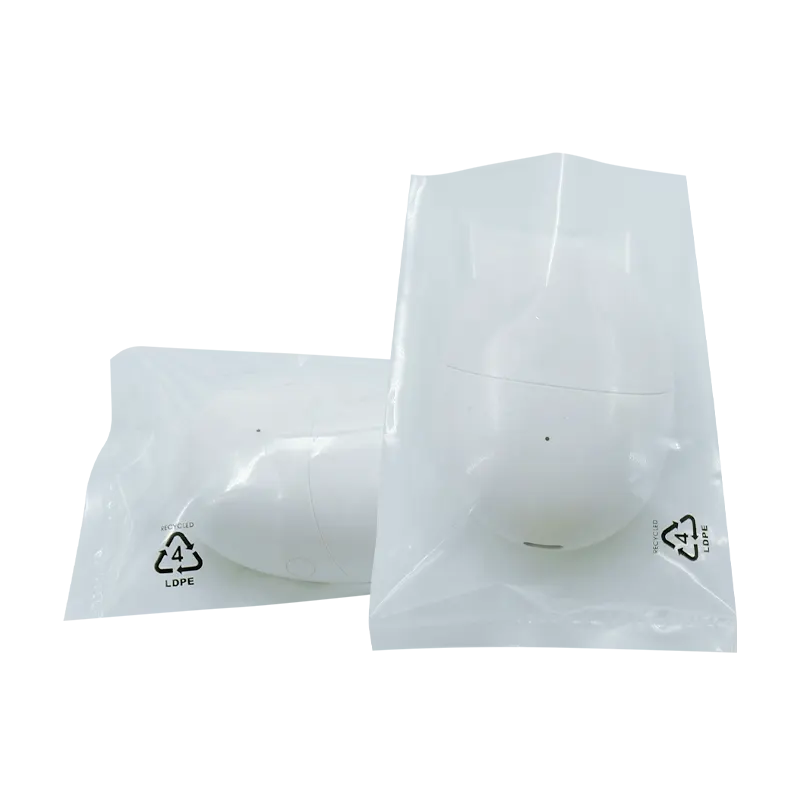
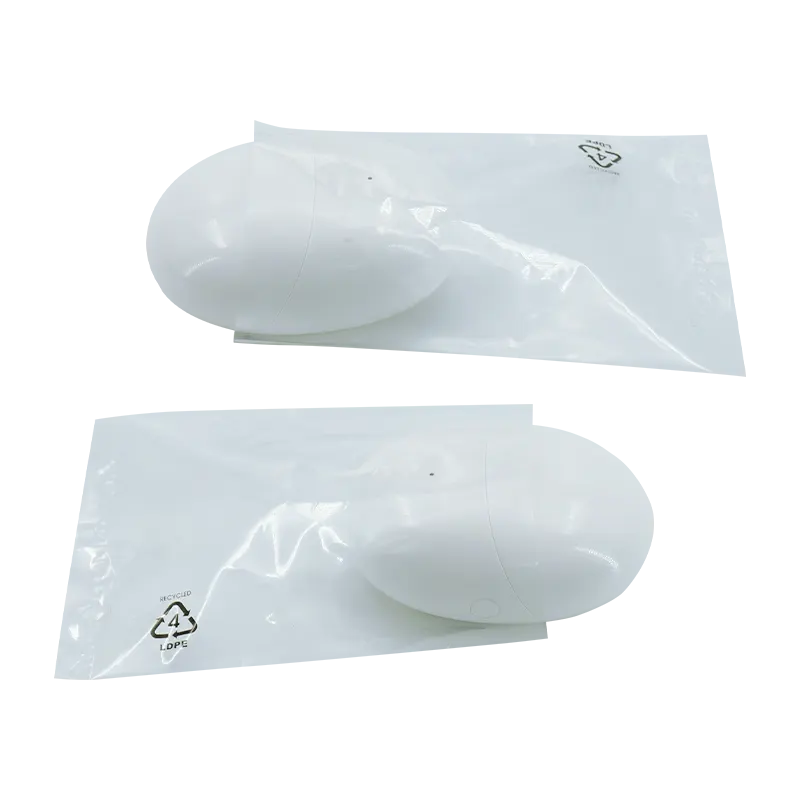
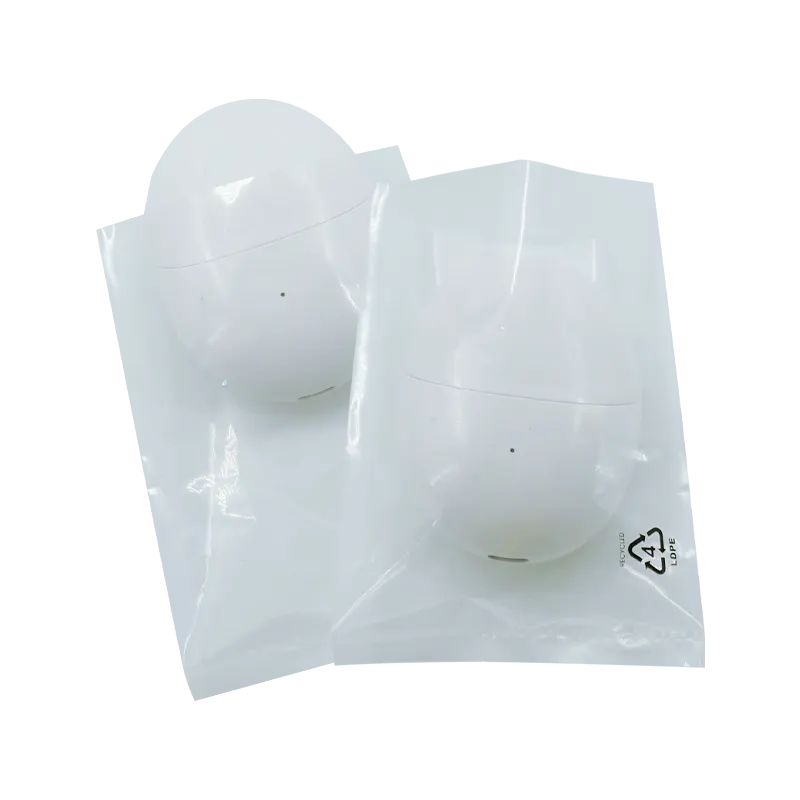
GRS-certified PCR Flat Bags For Bluetooth Earbuds
JXD Eco-Packaging Vietnam manufactures custom GRS-certified PCR flat bags for Bluetooth earbuds, chargers, cables, and other electronics. Custom sizes, thicknesses, recycled content, transparency, and logo printing are available, with sampling, quality inspection, and export-documentation support.
Need help with packaging?
Our experts will recommend the best fit and walk you through the choices


PRODUCT OVERVIEW
GRS recycled packaging bags, PCR flat bags, Bluetooth earbud packaging, electronics packaging bags
PRODUCT SPECIFICATIONS
Reference specification
| Item | Available specification |
|---|
Jiuxinda’s PCR flat bags are made with post-consumer recycled plastic and designed for Bluetooth earbuds, chargers, cables, wearable devices, electronic accessories, and other compact products.
Bag size, thickness, transparency, recycled content, color, and printing can be customized to suit your product and packing process. The bags help protect products from dust, moisture, fingerprints, and surface friction while reducing the use of virgin plastic.
From material selection and structural design to sampling and mass production, Jiuxinda provides a complete custom packaging service for brands, manufacturers, importers, and OEM/ODM suppliers.
Product Overview
Product: GRS-certified PCR flat bag
Material: Post-consumer recycled plastic
Bag style: Open-top flat bag
Appearance: Clear, translucent, frosted, or custom-colored
Size: Custom-made to fit the product
Thickness: Selected according to product weight and protection requirements
Recycled content: Customizable subject to performance and compliance requirements
Printing: Custom logo, recycling symbols, warnings, barcodes, QR codes, and product information
Applications: Bluetooth earbuds, chargers, cables, electronics, garments, cosmetics, toys, household products, and small hardware parts
Target markets: Domestic and export packaging projects
Final material composition, recycled content, test requirements, and documentation are subject to the approved sample, product specification, and purchase order.
Why Choose PCR Packaging?
Reduce the Use of Virgin Plastic
PCR material is produced from plastic that has already been used by consumers, collected, sorted, and reprocessed.
Using PCR material in packaging reduces dependence on virgin plastic and gives recovered plastic another useful life. It is a practical option for brands working toward packaging sustainability, supply-chain carbon reduction, or ESG targets.
Balance Sustainability with Packaging Performance
Sustainable packaging still needs to perform reliably.
A bag that tears easily, fits poorly, or slows down the packing line will not be suitable for mass production, regardless of its environmental credentials.
Jiuxinda evaluates product weight, shape, edges, transportation conditions, and packing methods before recommending a material and thickness. Samples can then be tested for fit, tensile strength, surface friction, and handling before mass production.
Communicate Your Packaging Improvements
Custom printing allows brands to display their logo, recycled-material statement, recycling instructions, product information, and other environmental messages directly on the bag.
Certification marks such as the GRS logo may only be used when the certification scope, order supply chain, and applicable labeling rules have been confirmed.
Key Product Features
Customizable PCR Content
The percentage of post-consumer recycled material can be adjusted according to the project’s sustainability target, product requirements, and destination market.
Higher PCR content may affect color, transparency, odor, surface appearance, and mechanical properties. For this reason, we recommend reviewing material samples and carrying out product packing tests before approving a final specification.
Flexible and Tear-Resistant
Material formulation and bag thickness can be adjusted to provide suitable flexibility and tensile strength.
The bags are designed to withstand normal packing, handling, and transportation. Products with sharp corners, protruding parts, or greater weight may require a thicker film or additional packing space.
Flat Surface and Easy Opening
The flat, smooth construction supports efficient manual packing. Bag opening width, stacking direction, and dimensional tolerance can be adjusted to suit the customer’s packing station.
For use with automatic or semi-automatic packaging equipment, please provide the equipment specifications and feeding requirements in advance.
Dust and Moisture Protection
PCR flat bags help protect products from dust, fingerprints, light moisture, and everyday contamination. They are suitable as inner packaging before a product is placed in a retail box or shipping carton.
Standard PCR flat bags are intended for basic dust, moisture, and surface protection. If your product requires anti-static protection, corrosion resistance, high-barrier performance, or airtight sealing, a different material or bag structure may be necessary.
Adjustable Transparency
The bags can be made clear, translucent, or naturally frosted.
A translucent finish keeps the contents identifiable while giving the packaging a softer appearance. If barcodes, labels, or components must be read through the bag, transparency should be tested during the sampling stage.
Custom Printing
The following information can be printed on the bag:
Brand logo
Product name and model
PCR material statement
Recycling instructions
Safety warnings
Barcode or QR code
Batch number
Traceability information
Before printing, the artwork, colors, dimensions, and position must be approved. Functional elements such as barcodes and QR codes should be tested on a physical sample before mass production.
Customization Options
Bag Dimensions
Each bag can be made according to the product’s length, width, height, and packing method.
When determining the correct size, we also consider:
Product thickness
Number of items per bag
Space required for folding or sealing
Accessories packed with the main product
Sharp corners or protruding parts
Compatibility with trays, retail boxes, or shipping cartons
Manual or automated packing requirements
For irregularly shaped products, we recommend providing a physical sample. Length and width measurements alone may not be enough to determine the correct bag size.
Film Thickness
A thicker bag is not always a better bag.
If the film is too thin, tensile strength and edge-seal performance may be affected. If it is unnecessarily thick, it increases material consumption, packaging weight, and cost.
We recommend a thickness based on product weight, shape, transportation conditions, and protection requirements. The final specification is confirmed through sample testing.
Recycled Content
The appropriate PCR percentage depends on several factors:
Brand sustainability targets
Destination-market requirements
Product weight
Required tensile strength
Color and transparency
Printing quality
Odor requirements
Certification and traceability needs
Target purchasing cost
The approved recycled content should be recorded in the product specification and purchase order.
Color and Transparency
Available options include clear, translucent, naturally frosted, and custom-colored film.
Because PCR material is recovered from post-consumer plastic, slight color variation may occur between batches. Customers with strict color requirements should provide a Pantone reference or physical color sample and agree on an acceptable color tolerance before production.
Printing
Single-color and multi-color printing are available.
Customers should provide editable artwork and confirm the following:
Print color
Print position
Artwork dimensions
Font outlines
Barcode and QR code readability
Environmental claims
Certification-mark requirements
Claims about recycled content and certification must match the material and documentation used for the actual order.
Packing and Carton Requirements
Packing quantities, inner packaging, carton size, carton marks, batch labels, and pallet requirements can be customized.
For overseas factories or automated production lines, please also confirm the bag opening direction and stacking method. This helps reduce sorting and handling after delivery.
Packaging Bluetooth Earbuds and Accessories
Bluetooth earbuds are small, but their surfaces and accessories often require careful protection.
PCR flat bags can be used for:
Earbud charging cases
Individual earbuds
Charging cables
Replacement ear tips
User accessories
Components packed before retail-box assembly
Service and replacement parts
Production-line handling and sorting
Several points should be reviewed before confirming the packaging.
Is the Product Surface Easy to Scratch?
Glossy plastic, painted surfaces, metal finishes, and other delicate surfaces may be sensitive to friction.
During sampling, the bag should be tested through repeated insertion, removal, rubbing, and transportation simulation. If the standard PCR material is not soft enough, the formulation or packaging material may need to be adjusted.
Does the Product Have Sharp Corners?
Connectors, metal accessories, and protruding components may puncture a thin bag.
A thicker film, larger bag size, or additional inner protection may be required for these products.
Is Anti-Static Protection Required?
A standard PCR flat bag is not automatically an anti-static bag.
If the packaging will contain circuit boards, chips, or electrostatic-sensitive components, please provide the required ESD performance level and test method. A dedicated anti-static packaging solution may be needed.
Does the Bag Need to Be Sealed?
An open-top flat bag is suitable for quick packing and product sorting, but it does not provide a full seal.
Self-adhesive bags, zipper bags, or press-seal bags may be more suitable when accessories must be secured or additional moisture protection is required.
Applications
Consumer Electronics and 3C Accessories
Suitable for chargers, cables, mobile accessories, mice, cameras, wearable devices, grooming-product accessories, and other electronic products.
Garments and Fashion Accessories
Suitable for T-shirts, underwear, socks, hats, scarves, apparel components, and e-commerce inner packaging.
Cosmetics and Household Products
Suitable for beauty tools, personal-care items, travel accessories, promotional sets, and small household products.
Toys and Creative Products
Suitable for toy components, stationery, cards, souvenirs, gifts, and promotional items.
Hardware and Industrial Components
Suitable for screws, connectors, small tools, molded plastic parts, and other non-sharp components.
Every application has different requirements for load capacity, puncture resistance, static control, odor, and cleanliness. Please tell us how the bag will be used so that we can recommend an appropriate specification.
JXD Eco-Packaging Vietnam’s Custom Packaging Capabilities
Founded in 2010, JXD Eco-Packaging Vietnam specializes in the development and production of sustainable flexible packaging.
Supported by production facilities in Shenzhen and Dongguan, Jiuxinda manages key processes including film production, printing, and bag making. Keeping these processes within one production system improves control over materials, dimensions, printing, sealing, and batch consistency.
It also allows us to respond more efficiently when customers need to modify a specification, improve a sample, or coordinate packaging with a new product launch.
In addition to PCR flat bags, Jiuxinda manufactures:
Self-adhesive bags
Press-seal bags
Zipper bags
Handle bags
Drawstring bags
CPE frosted bags
Compostable bags
Biodegradable non-woven bags
Paper bags
Glassine paper bags
If an open-top flat bag does not provide the required sealing, presentation, or reusability, our team can recommend a more suitable bag style.
Certification and Testing Support
JXD Eco-Packaging Vietnam has established management and certification systems that include GRS, Eco-Certification, and BSCI.
The exact certificates, test reports, transaction documents, or traceability records required for an order should be confirmed during the quotation stage.
For export projects, testing requirements such as REACH, RoHS, and PFAS can be discussed according to the material, product use, customer standard, and destination market. Compliance should be determined using the actual order specification, current regulations, and valid third-party test reports.
Jiuxinda’s quality-control equipment includes haze meters, color-difference meters, gloss meters, and tensile testers. Depending on the order requirements, inspections may cover:
Bag length and width
Film thickness
Appearance and cleanliness
Color and transparency
Printing position and quality
Edge-seal strength
Tensile performance
Packing quantity
Carton and label information
For projects with detailed quality requirements, inspection items, sampling levels, and acceptance standards can be agreed before production.
Custom Manufacturing Process
1. Submit Your Requirements
Provide the product dimensions, photos or drawings, packaging application, estimated order quantity, destination market, artwork, and delivery location.
2. Review the Packaging Application
We assess the product’s weight, shape, edges, packing process, transportation conditions, and environmental requirements.
A recommended material, PCR content, bag structure, size, and thickness are then proposed.
3. Confirm the Specification and Quotation
Pricing is calculated after the material, dimensions, thickness, printing, order quantity, packing method, and testing requirements have been confirmed.
4. Make and Test Samples
Samples can be tested for product fit, appearance, handling, barcode scanning, tensile strength, and transportation performance.
If necessary, the dimensions, thickness, material formulation, or printing can be adjusted before approval.
5. Approve the Sample and Begin Production
Mass production begins after the sample, artwork, and product specification have been approved.
Production follows the signed sample or other quality standard agreed by both parties.
6. Inspect and Ship
Dimensions, thickness, appearance, printing, sealing, packing quantity, and labeling are checked before shipment.
Products are then packed and delivered according to the agreed shipping requirements.
Information Required for a Quotation
To receive an accurate quotation, please provide:
Product name and application
Product length, width, and height
Required bag size, if available
Photos or samples of the current packaging
Required PCR content
Film thickness
Color and transparency
Number of print colors
Approximate print area
Estimated order quantity
Destination country or market
Required certificates or test reports
Delivery location
Expected delivery date
If you are unsure about the bag dimensions or thickness, you can send us the product or an existing packaging sample for evaluation.
What Affects the Price?
PCR flat bags are made to order, so pricing depends on the confirmed specification.
The main cost factors include:
PCR material type and recycled content
Bag length, width, and thickness
Order quantity
Color and transparency
Number of print colors
Printed area and artwork complexity
Printing plate requirements
Inner packing and carton method
Certification and testing requirements
Delivery location and shipping method
When comparing quotations, make sure each supplier is quoting the same material, dimensions, thickness, recycled content, printing specification, and quality standard. A lower unit price may reflect a different product specification.
Frequently Asked Questions
Is a PCR Bag Automatically Recyclable?
Not necessarily.
Actual recyclability depends on the material structure, printing, labels, local collection systems, and recycling facilities. PCR describes the recycled content used in the bag; it does not guarantee that the finished bag will be accepted by every local recycling system.
If you have a specific design-for-recycling requirement, please provide the destination market and applicable standard.
What Does GRS Certification Mean?
GRS stands for Global Recycled Standard. It covers recycled-content verification, supply-chain traceability, environmental management, chemical restrictions, and social requirements.
Whether a particular order can be handled within a GRS-certified supply chain, and which documents can be issued, must be confirmed against the actual material and order arrangement.
Can the GRS Logo Be Printed on the Bag?
The logo cannot be used solely because the bag contains PCR material.
Use of the GRS logo is subject to certification scope, supply-chain requirements, approval procedures, and labeling rules. The artwork must be reviewed before printing.
Is a Higher PCR Percentage Always Better?
It depends on the application.
Higher recycled content can reduce the use of virgin material, but it may also affect transparency, color, odor, surface appearance, and mechanical strength. The most suitable percentage is one that meets both the environmental target and the packaging performance requirement.
Can You Provide Samples?
Existing material samples or similar-size bags can normally be provided for initial evaluation.
Samples requiring custom dimensions, special colors, printing plates, or dedicated materials may involve a sampling charge. This will be confirmed before sampling begins.
What Is the Minimum Order Quantity?
MOQ depends on the bag dimensions, material, thickness, printing method, and production process.
Please send us the specification and estimated quantity so that we can recommend a practical production quantity.
What Is the Production Lead Time?
Lead time depends on the material, printing, order quantity, production schedule, and testing requirements.
Projects requiring printing plates, custom colors, or dedicated material preparation should also allow time for artwork approval and sampling. The confirmed lead time will be stated after the final specification has been approved.
How Do You Control Batch Consistency?
The approved material, dimensions, thickness, color, printing, and reference sample are recorded before mass production.
For projects with strict appearance or performance requirements, color tolerances, limit samples, inspection methods, and acceptance criteria can be agreed in advance.
Can These Bags Be Used for Food Packaging?
The bags described on this page are intended primarily for electronics, garments, cosmetics, toys, household products, and industrial components.
If the bag will come into direct contact with food, pharmaceuticals, or medical products, please inform us before quotation. The material, production conditions, and regulatory requirements must be evaluated separately.
Request a Custom Packaging Proposal
Send us your product dimensions, packaging photos, estimated order quantity, and destination market.
Our team will review the application and recommend a suitable material, PCR content, bag style, thickness, and printing method. Samples can be tested before mass production so that performance, compliance documentation, and packing efficiency are confirmed before the order is placed.
BUYER QUESTIONS
Frequently asked questions
Answers to the questions buyers usually need settled before requesting a production sample.
What is the minimum order quantity for the product?
The minimum order quantity is 1000 pieces, and free samples can be provided
ABOUT THE MANUFACTURER
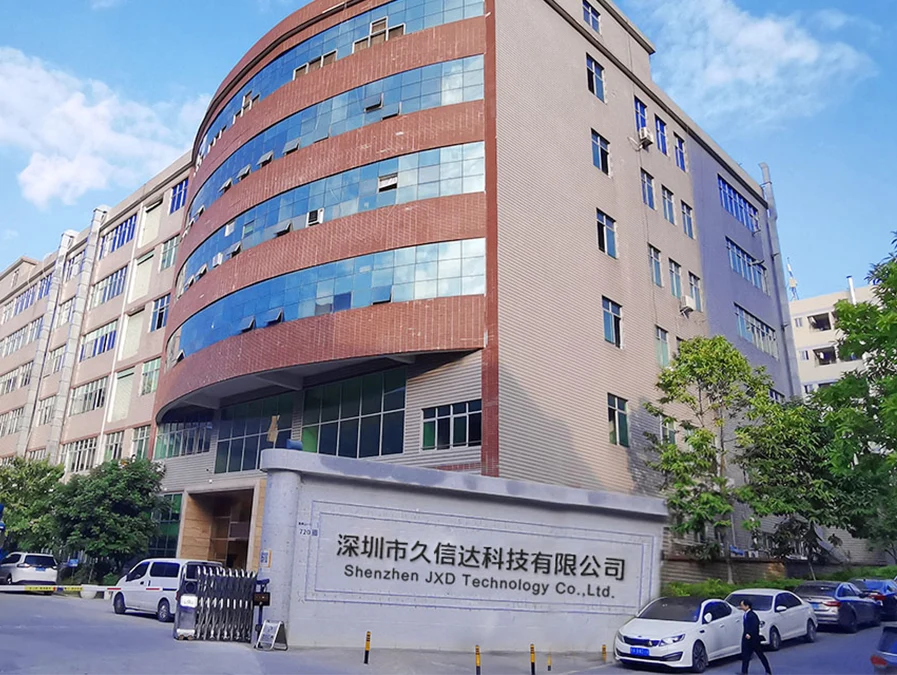
About DongGuan JXD Eco-packaging
Explore custom Eco-packaging styles
Choose a structure first; material, dimensions and printing are confirmed for each custom order. The category pages show multiple material options, not only Post-Consumer Recycled Bag (PE/CPE).
Related products
-
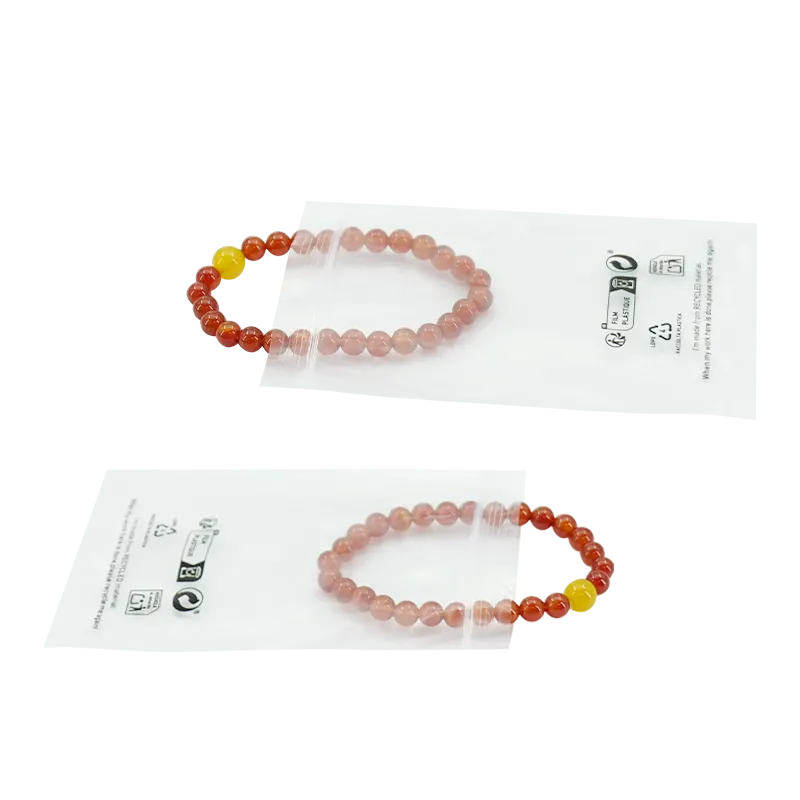
Custom Recyclable PE Poly Bags for Jewelry and Retail Packag
Order custom recyclable PE poly bags from JXD Eco-packaging. High-clear PCR film, press-seal closure, custom sizes, printing and GRS documentation for eligible orders.
-
GRS-certified PCR Flat Bags For Bluetooth Earbuds
JXD Eco-Packaging Vietnam manufactures custom GRS-certified PCR flat bags for Bluetooth earbuds, chargers, cables, and other electronics. Custom sizes, thicknesses, recycled content, transparency, and logo printing are available, with sampling, quality inspection, and export-documentation support.
-
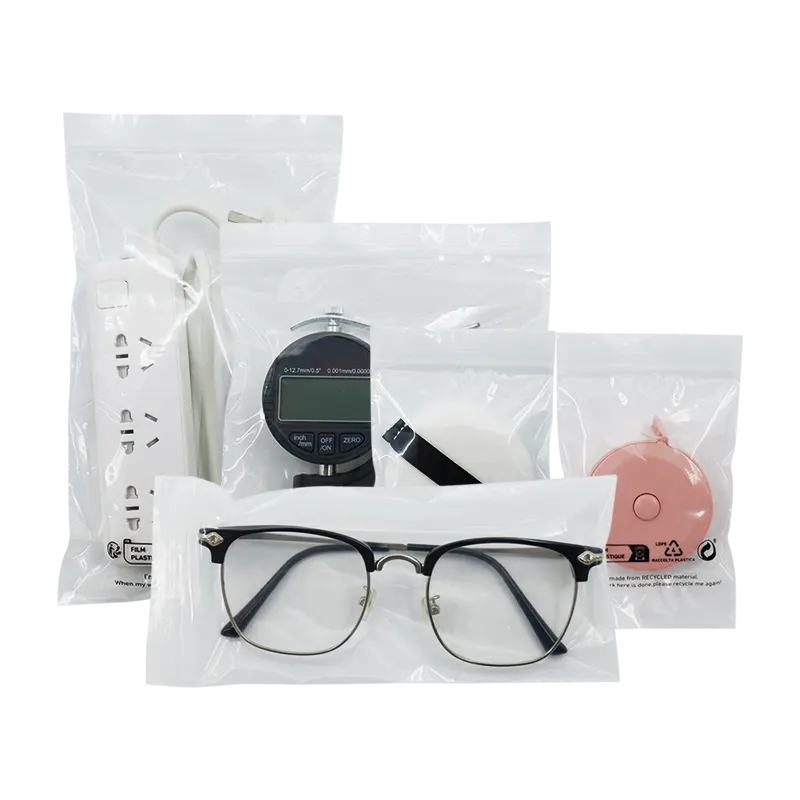
Custom Recyclable Transparent PE Zipper Bags
Products are eligible for GRS certification and a TC can be issued 7–10-day lead time for standard orders High transparency and flexibility with puncture resistance Free samples available
-
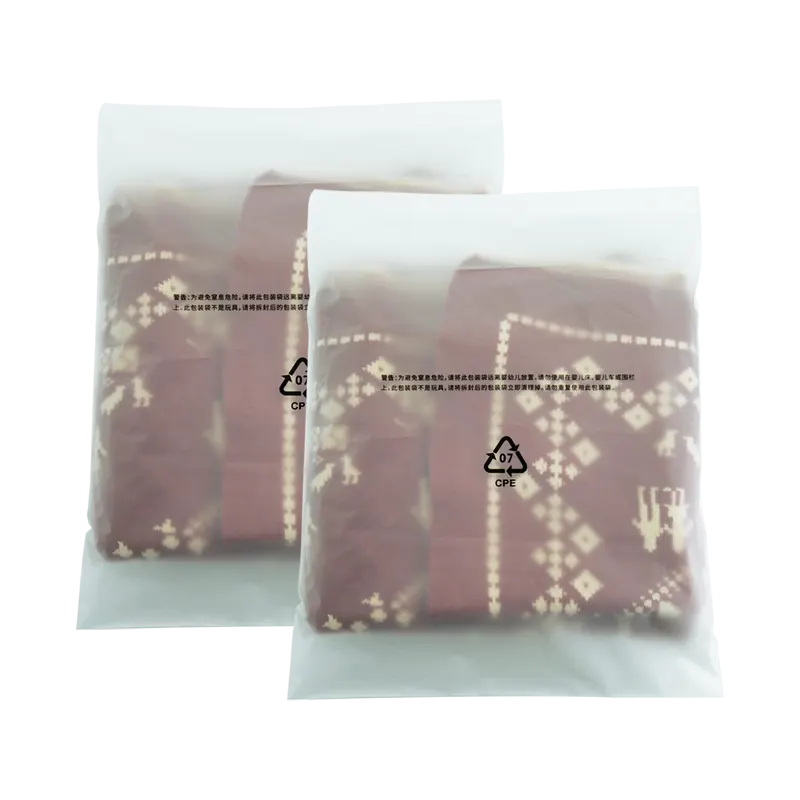
custom packaging bags for clothing
Custom clothing packaging is more than just protection—it is a direct reflection of your brand identity. JXD Eco-Packaging offers free samples and manufacturing for all your apparel packaging needs Custom Styles | Any bag style you need. Custom Materials | Tailored to your material of choice. Custom Sizes | Available in any dimension. Custom Shapes | Perfectly shaped to fit your brand.