Complete Buyer’s Guide to Selecting Reliable Bags for Packaging Products
Bags for packaging products are one of the most versatile, cost-effective packaging solutions for nearly all consumer and industrial goods. From small daily necessities, beauty accessories, and toy products to hardware parts and home goods, custom and standard packaging bags directly protect finished goods during storage, transit, and retail display. For wholesale buyers, brand procurement managers, and supply chain operators, choosing the right manufacturer for product packaging bags is critical to stabilizing product quality, streamlining inventory cycles, and improving customer satisfaction. Many procurement failures stem from generic factory selection, ignoring product matching, practical performance, and batch consistency. This guide shares practical, buyer-focused tips for sourcing qualified bags for packaging products and key criteria to evaluate manufacturers.
Match Packaging Bag Types to Your Finished Product Characteristics
Before comparing manufacturers and quotations, the first step for every buyer is to confirm the exact packaging bag type that fits their products. Different product weights, sizes, textures, and storage environments require completely different packaging bag structures and materials. Blindly choosing universal packaging bags will easily lead to packaging deformation, tearing, moisture damage, or poor shelf display effects.
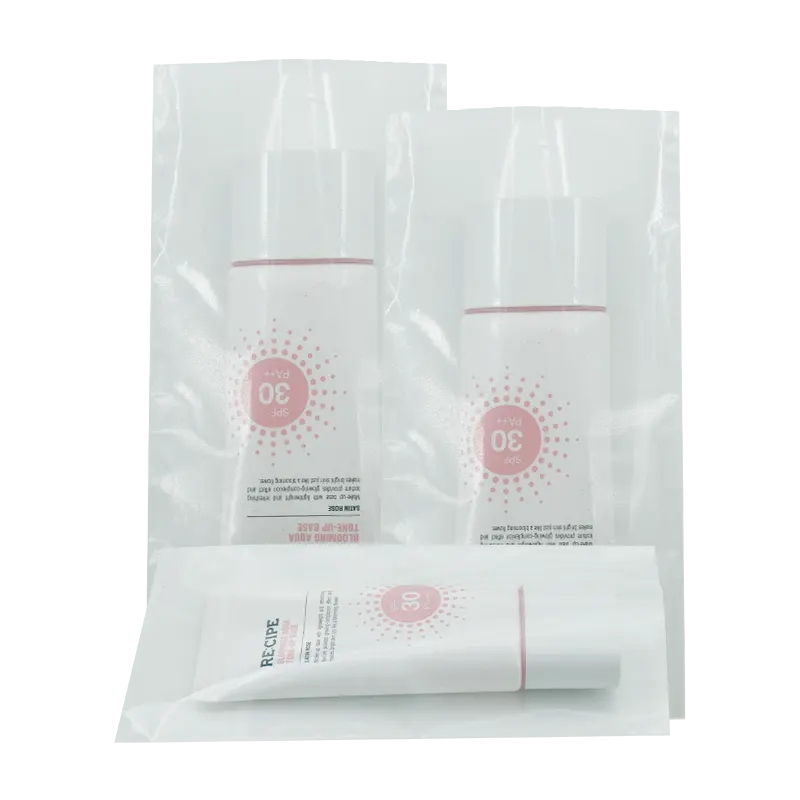
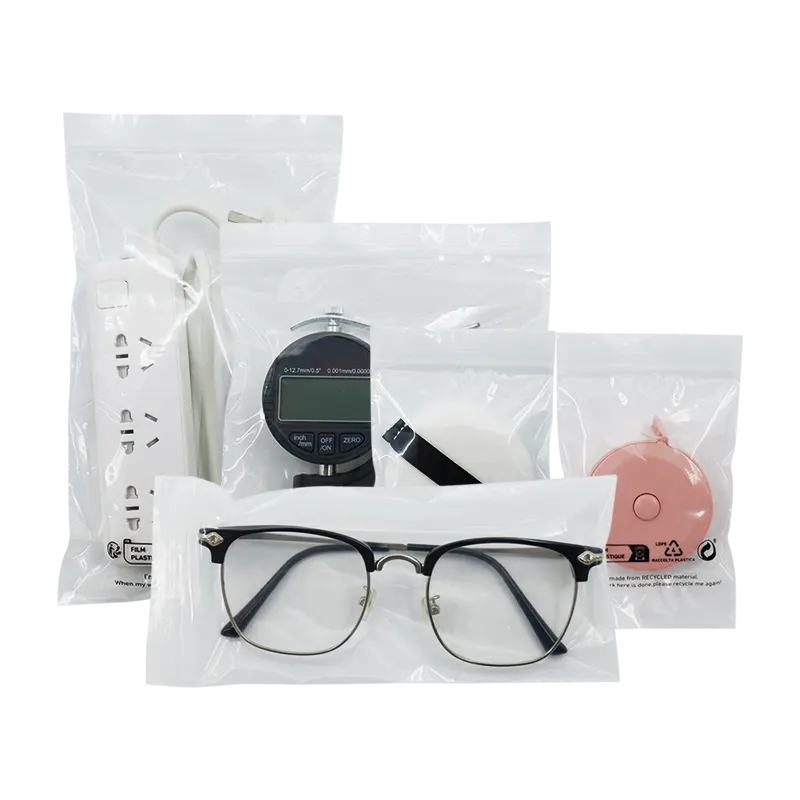
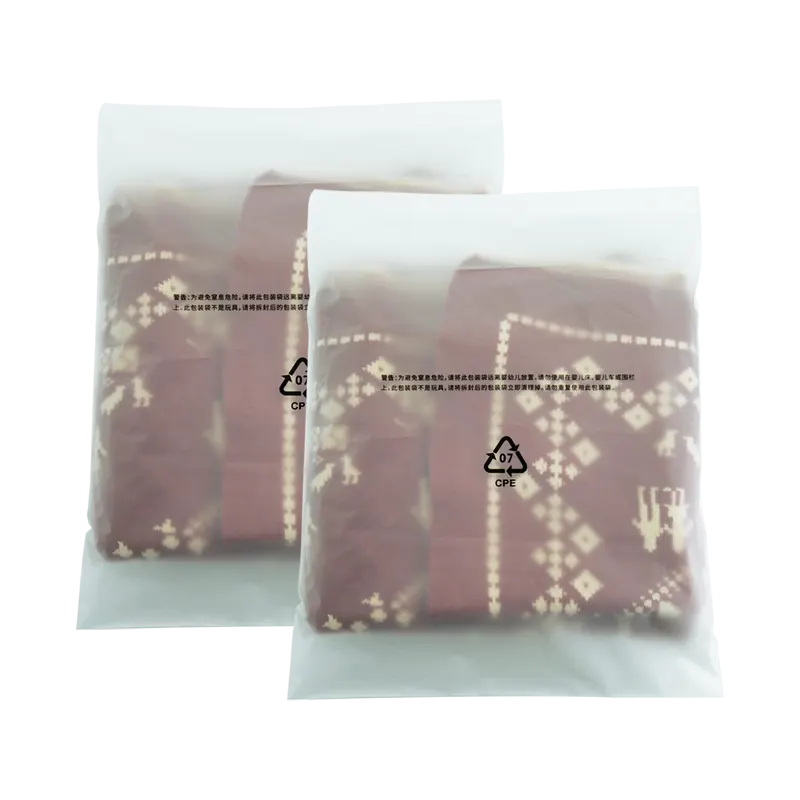
For lightweight, small-sized retail products such as cosmetics, accessories, stationery, and toys, thin-film transparent or frosted packaging bags are ideal. These bags focus on appearance presentation, with neat sealing and clear printing to highlight product details and enhance retail attractiveness. For medium-weight daily goods and textile products, thickened PE and PP packaging bags are more suitable, featuring better toughness and compression resistance to avoid rupture during stacking and transportation.
For heavy hardware accessories, electronic components, and long-term stored products, buyers need heavy-duty packaging bags with anti-puncture, dust-proof, and moisture-proof functions. In addition, buyers with retail branding needs can prioritize customized self-adhesive bags, stand-up bags, and color-printing packaging bags, while wholesale and transit-focused scenarios can choose standard plain bags to control costs. Only by matching bag functions with product attributes can buyers avoid unnecessary packaging costs and quality risks.
Practical Factory Selection Criteria for Stable Mass Production
When sourcing bags for packaging products, many buyers only compare unit prices and ignore the manufacturer’s actual production capacity and process level, resulting in large differences between bulk goods and samples. Unlike customized high-end packaging, conventional product packaging bags emphasize batch stability, standard dimensional accuracy, and delivery efficiency, which are the core strengths of reliable manufacturers.
First, evaluate standardized production and equipment level. Excellent packaging bag manufacturers adopt automated film blowing, cutting, sealing, and printing machines, ensuring uniform bag thickness, straight edge trimming, consistent sealing strength, and no air leakage or cracking. Factories with outdated manual equipment often have frequent dimensional errors, uneven sealing, and low finished product rates.
Second, check the manufacturer’s product line richness and industry experience. Professional factories have mature production solutions for different product packaging needs, able to switch flexibly between standard bags, printed bags, thickened bags, and functional packaging bags. They can also provide targeted suggestions on material thickness and structure optimization according to buyers’ product weight and packaging scenarios.
Third, confirm scalable production capacity. Whether for small-batch trial orders or large-batch bulk orders for seasonal product updates, qualified manufacturers can maintain stable production schedules, avoid order delays caused by insufficient capacity, and support long-term repetitive order cooperation.
Key Quality and Detail Checks to Avoid Sourcing Defects
Most quality problems of bags for packaging products appear in mass production rather than sample stages. Buyers need to master targeted inspection details during sampling and bulk receipt to effectively reduce defective rates and procurement losses. These practical inspection points are often overlooked in ordinary procurement processes.
First, inspect material texture and physical performance. Check whether the packaging bag surface is smooth and flat without bubbles, granular impurities, scratches, or uneven color. Conduct tensile and sealing tests to verify no cracking at the edges and no separation of the sealing layer after stretching, ensuring adaptability for long-distance transportation and stacked storage.
Second, verify dimensional and batch consistency. For standardized packaging bags, the length, width, and thickness of each batch must maintain a fixed tolerance range. Irregular sizes will affect automatic packaging machine use and product packaging neatness. For printed packaging bags, check the clarity, color uniformity, and position accuracy of LOGO and patterns to ensure consistent brand display.
Third, check product safety and cleanliness. Packaging bags for daily contact products must be odor-free and non-toxic, with clean inner surfaces to avoid contaminating finished goods. Buyers can require manufacturers to provide basic safety test reports to ensure compliance with daily product packaging standards.
Long-Term Cooperation Rules to Optimize Your Packaging Procurement
For enterprises with continuous packaging demand, selecting a manufacturer is essentially building a stable supporting supply chain. In addition to quality and price, buyers need to focus on service flexibility, cost transparency, and after-sales guarantee to achieve long-term optimized procurement.
First, prioritize manufacturers with transparent quotation rules. Reliable suppliers provide detailed quotation lists based on material, thickness, size, printing process, and order quantity, with no hidden charges, no arbitrary price increases for long-term orders, and clear preferential policies for bulk orders.
Second, confirm flexible order and service support. Market product iteration is fast, and packaging specifications often need timely adjustment. Excellent manufacturers support flexible customization of new packaging specifications, small-batch trial production, and rapid order adjustment, adapting to buyers’ product update and market changes.
Third, clarify complete after-sales mechanisms. Formal manufacturers have clear handling standards for defective products, wrong specifications, and delayed delivery. They provide timely replacement, rework, and compensation solutions for quality problems, effectively reducing buyers’ operational risks and ensuring smooth product shipment.
Conclusion
Sourcing high-quality bags for packaging products does not rely on low-price competition, but on reasonable product matching, stable factory strength, strict quality inspection, and standardized after-sales service. By selecting manufacturers based on actual product packaging scenarios and focusing on batch stability and long-term service capabilities, buyers can build a cost-effective and low-risk packaging supply chain, effectively protecting finished product quality and improving overall brand operational efficiency.