The EU Regulation on Packaging and Packaging Waste (EU 2025/40, referred to as PPWR) officially took effect in August 2026, imposing comprehensive and stringent controls on all types of packaging. As commonly used cross-border packaging for food and fruit and vegetable packaging, biodegradable zip lock bags must meet exclusive compliance standards to access the EU market. Deeply engaged in the field of environmentally friendly packaging compliance, JXD has sorted out systematic implementation paths based on the new regulation rules, helping enterprises avoid customs clearance risks and compliance penalties.
1. Strict Raw Material Safety Control to Prevent Hazardous Substance Exceedance
Chemical compliance of raw materials is the basic threshold for PPWR market access, corresponding to the hazardous substance control provisions in Article 5 of the regulation. Biodegradable zip lock bags must adopt pure PLA+PBAT bio-based materials. All auxiliary accessories including zippers, printing inks and sealing adhesives shall be compatible with compostable properties, and non-degradable materials such as PE and nylon are strictly prohibited. Meanwhile, products must strictly control heavy metals and PFAS substances, with the total content of lead, cadmium, mercury and hexavalent chromium not exceeding 100mg/kg. Food-contact products require full control of per- and polyfluoroalkyl substance residues. JXD has established a strict raw material sampling inspection mechanism, providing compliant test reports for each batch of raw materials to eliminate excess risks from the source and consolidate the foundation of compliance.
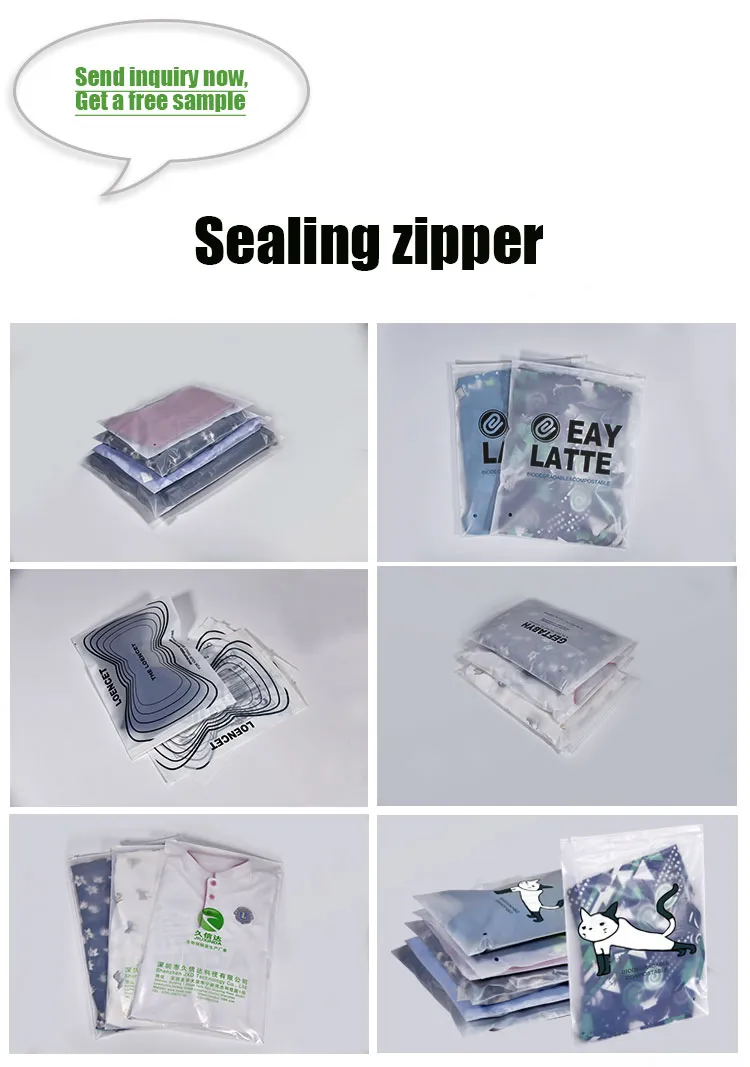
2. Obtain Authoritative Composting Certification to Enjoy Recycled Material Exemption Benefits
Article 7 of the PPWR clearly stipulates that qualified compostable plastic packaging is exempt from the mandatory recycled plastic content requirements for plastic packaging effective 2030, which serves as the core policy advantage of biodegradable zip lock bags. This exemption is only applicable to products that have passed the EN 13432 industrial composting certification. The entire bag body, zippers and printing layers must meet the standards simultaneously, achieving a high biodegradation rate within 180 days with no ecotoxicity, and holding the official TÜV Seedling logo. Unsubstantiated "biodegradable" claims without authoritative certification will be deemed false environmental marketing.
3. Optimize Product Design to Avoid Over-packaging Bans
The new regulation mandates lightweight packaging design and space utilization efficiency. Starting from 2030, all marketable packaging must adopt minimal functional design, eliminating over-packaging issues such as thickened redundant walls and multi-layer superfluous structures. After filling products, the internal empty space ratio of biodegradable zip lock bags shall not exceed 50%. In addition, the EU bans single-use plastic packaging for fresh fruits and vegetables weighing below 1.5 kilograms, and qualified compostable biodegradable zip lock bags are the only alternative solution. Enterprises shall keep track of the update of EU exemption lists to accurately adapt to the control requirements of segmented scenarios.
4. Improve Labeling and Documentation to Build a Full-chain Compliance System
Standardized labeling and complete compliance documentation are essential prerequisites for cross-border circulation. Starting from August 2028, products must be printed with unified EU recycling marks and exclusive compostable logos, with clear manufacturer traceability information. All environmental claims must be supported by valid certification reports, and vague biodegradation publicity is prohibited. Enterprises shall compile complete technical files and issue EU Declarations of Conformity (DoC). Full-set documents must be delivered throughout the supply chain and retained by EU importers for at least five years for inspection. In addition, enterprises selling directly to EU end consumers are required to complete EPR (Extended Producer Responsibility) registration to form a closed-loop full-process compliance system.
In conclusion, to smoothly enter the EU market, biodegradable zip lock bags must implement four core compliance measures: standardized raw material safety, authoritative certification, optimized structural design and complete documentation compliance. Adapting to the phased control rules of the PPWR through standardized compliance solutions can effectively stabilize the market competitiveness of enterprises in EU cross-border trade.